

What is accessibility monitoring?
Accessibility monitoring is the continuous checking of websites and applications for accessibility issues over time, so that regressions introduced by new content, code, or third-party components are detected between formal audits. Automated monitoring catches the issues automated accessibility checks can detect and is a complement to expert testing, not a replacement.
This site is built to the same standards our products are designed to help you meet.
The problem ACM solves
An audit tells you where you stood on the day it was done. The day after, someone ships a new template, a CMS update, or a third-party widget, and accessibility quietly regresses. By the time anyone notices, it is often a complaint. Most teams have no way to see regressions between audits, and no record showing they were watching. ACM closes that gap with continuous monitoring and a running record.
“An audit is a snapshot. Accessibility changes every time you ship. ACM is how you keep watching between audits, and prove you did.”
Continuous monitoring, not a one-time scan, and not a replacement for an audit
ACM runs scheduled accessibility checks across your sites, detects regressions against prior runs, and alerts the right people before issues accumulate. It complements audits rather than replacing them: an audit gives you depth and expert judgment at a point in time, and ACM gives you continuity and an early warning between those points. Automated monitoring catches the issues automated accessibility checks can detect, which is exactly what makes it effective at catching regressions early; it does not replace expert testing for issues that need human judgment.
How it works
- 1
Define the sites and pages to monitor.
- 2
ACM checks them on a schedule and compares each run to the last.
- 3
When a regression appears, ACM alerts the owners and logs it with a timestamp.
- 4
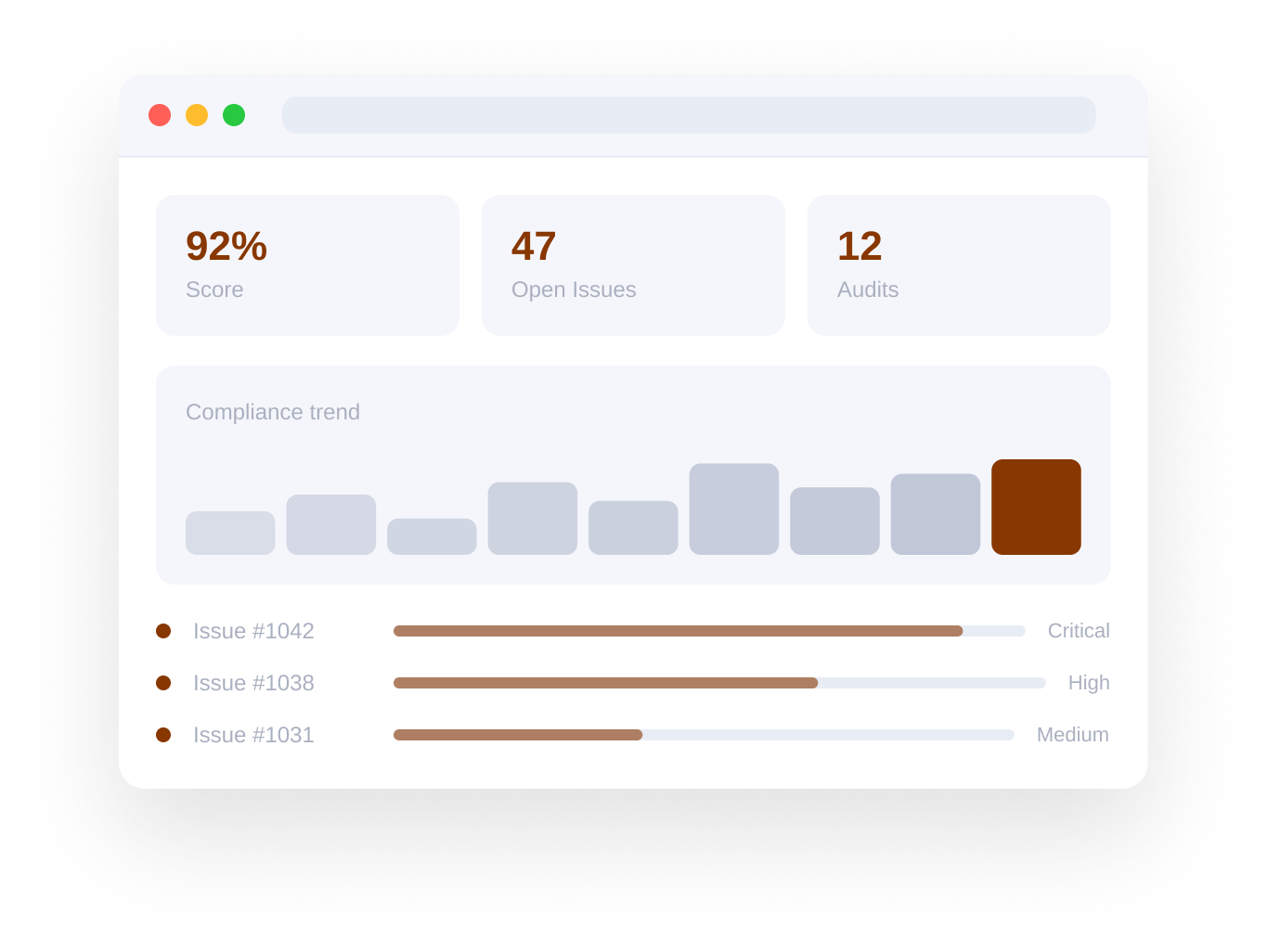
Track trends and open issues in a dashboard, across one site or many.
- 5
If you run AGM, findings flow into your governance record automatically.
Core capabilities
Scheduled monitoring
Scheduled monitoring across one or many sites.
Regression detection
Regression detection against prior runs.
Owner alerts
Alerts to the right owners when something changes.
Dashboard reporting
Dashboard reporting and trends across a multi-site estate.
Time-stamped record
A time-stamped record of what changed and when.
Dynamic and SPA coverage
Coverage of dynamic and single-page applications (route-aware checking).
Optional AGM integration
Optional AGM integration.
What you get
- Continuous coverage between audits, not a one-time report.
- Early alerts on regressions, before they become complaints.
- A time-stamped monitoring record you can show.
- Multi-site visibility in one dashboard.
When ACM is the right fit
You have a large or fast-changing web estate where regressions appear between audits. (Multi-site enterprises, government agencies, universities, and transport authorities.)
You ship frequently (CMS updates, new templates, third-party widgets) and need to catch accessibility regressions early.
You need evidence of ongoing monitoring, not just a periodic audit, for a regulator, a board, or a complaint response.
You manage many properties and need one view across them.
Security and data handling
ACM is designed to monitor accessibility without collecting personal data: it evaluates page structure and accessibility properties, not user content, and masks or excludes form-field values and personal information.
Works on its own
ACM works on its own. If you also run AGM, monitoring findings flow into your governance record as accountable items, so regressions become part of your evidence trail rather than a separate alert feed.
Built around your obligations
Monitors against internationally recognized accessibility standards, including WCAG 2.2 (A and AA) and EN 301 549, to support ongoing compliance with the accessibility laws that apply in your jurisdiction, such as the Accessible Canada Act and provincial acts in Canada, the ADA and Section 508 in the United States, or EN 301 549 and the European Accessibility Act in the European Union.
Monitors against WCAG 2.2 (A and AA).
See ACM in action
We set up monitoring on a site of your own, show how a regression is detected and alerted, and the record it produces. About 30 minutes.
- Monitoring set up on a site of your own
- See how a regression is detected and alerted
- About 30 minutes
- A senior consultant — not a sales representative
A senior consultant, not a sales representative, will be in touch within one business day.